Overview
The first “home” of the Fort Wayne Urban League was a multi-use building that now serves as the location for the African/African-American Historical Society and Museum of Allen County, housing the city’s largest public collection of African art.
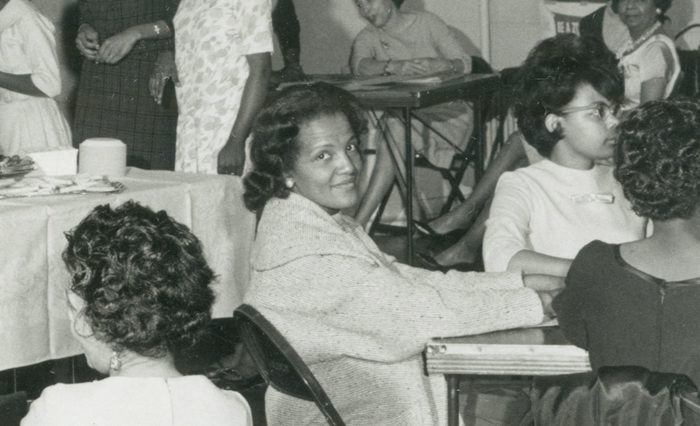
Nestled in the East Central neighborhood, and in walking distance from downtown Fort Wayne, the building was one of the early hubs of Black life, when it was the Phyllis Wheatley Social Center.
Listen and Learn
Listen to the original recording of this historic session and follow along with the full transcript. Experience the moment as it happened with both audio and text for easy reference.
Transcript
Condra Ridley
I am Chief Condra Ridley, one of the charter members of the African and African American Historical Museum and Society.
Getting Started
I began working on the project in 1998. I didn’t attend the first meeting, which included Mrs. Hanna Stith, Dr. Miles Edwards, Mr. Jim Blanks, and others. Mr. Blanks was very committed to getting the museum started and even contributed funds. Sadly, before we could meet again, he passed away. His dedication motivated us to push forward and establish the museum.
Carol Cartwright
I was a founding member and served on the museum’s board for a few years. While Hanna Stith is often recognized as the official founder, there were actually about seven of us who met regularly to develop the museum.
Dr. Miles S. Edwards
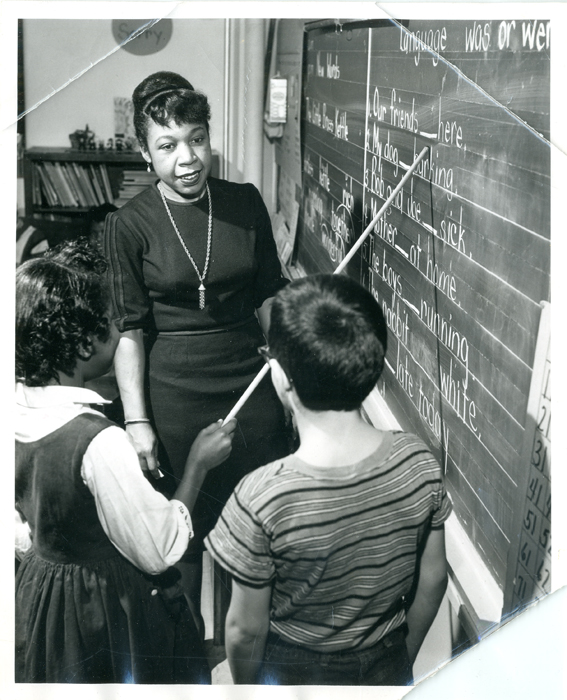
I was one of the founders of the African American Historical Society. As an educator, I worked alongside Mrs. Hanna Stith, who was also an educator. Both of us were products of Fort Wayne Community Schools (FWCS) and later returned to work in the district. She was among the earliest Black teachers in Fort Wayne, and I was in the second wave of Black educators hired.
Denise Porter
Fort Wayne didn’t get its first African American public school teacher until the 1950s. The first, Ms. Fenney, only stayed for about a semester. Mrs. Mary Ray arrived later in the decade as part of the second wave of Black teachers. Alongside her, a few more educators, including Gloria Morton Fenney and Verna Adams, were hired. Verna Adams taught for nearly 40 years, and her children are still active in the community today.
The Museum’s Opening
Condra Ridley
We officially opened the museum in February 2000, during Black History Month, to honor Dr. Carter G. Woodson, the founder of what we now celebrate as Black History Month. Dr. Al Brothers, an educator, and Mrs. Mary Ray were also actively involved in our efforts.
The building at 436 Douglas has a rich history. It was originally the Phyllis Wheatley Center, a gathering place for African Americans in the community. Although Fort Wayne didn’t have formal “Whites Only” signs, many establishments barred Black residents. The Phyllis Wheatley Center became a hub for meetings, youth programs, and cultural events. Over time, its activities transitioned to the McCulloch Center, later known as the Al Jennings Center.
The building evolved into different spaces, including the John Dixie Learning Center. Outside, there is a headstone honoring John Dixie, who was the head minister at Pilgrim Baptist Church.
Mr. William Warfield’s Legacy
Mr. Warfield, often mistakenly thought to have owned the museum building, actually lived next door. He arrived in Fort Wayne in 1897 as an educated man, a talented writer, and a musician.
Roberta Ridley
Mr. Warfield was an entrepreneur and a college-educated African American from Mayfield, Kentucky. Though he was qualified to be a teacher, he couldn’t find work in education due to racial barriers. Instead, he established a boarding house for African American railroad workers. He secured a contract with the Pennsylvania Railroad, providing accommodations for Pullman porters who weren’t allowed to stay in local hotels due to segregation.
Mr. Warfield also kept a detailed diary, documenting national, local, and international events. His writings include records of his purchases, payments, and daily life. The African American Historical Museum holds the original diary, with a copy preserved in the rare books room at the Allen County Public Library. In 2009, we worked to transcribe the entire diary, which is now available online.
The History of Douglas and Lafayette Streets
At the corner of Douglas and Lafayette, many businesses thrived. I remember Mrs. Henderson’s cleaners, where my mother would take her clothes. Mrs. Henderson’s sister, Miss Marjorie Whitcliffe, often hosted important visitors at her home.
There were also restaurants and a record shop owned by Mr. Al Styles at 436 Douglas. At one point, the location served as a learning center. Additionally, Mr. Warfield published a newspaper that came and went over the years.
When the African American Museum considered the building, it was in poor condition. The Ministerial Alliance, a group of local ministers, owned the property and agreed to let us use it for ten years. We took possession of the building in 1999. Mrs. Hanna Stith and her dedicated husband, Harold Stith, worked tirelessly to restore it, carpeting, painting, and making it a welcoming space.
For 13 years, Mrs. Stith served as the museum’s director and curator, leading its growth. In 2009, as our lease agreement ended, she asked me to step in as interim director while she cared for her husband. Tragically, Mr. Stith passed away that first week, but I remained through the summer, and we successfully negotiated to purchase the building.
Central High School and Its Impact
Jonathan C. Ray
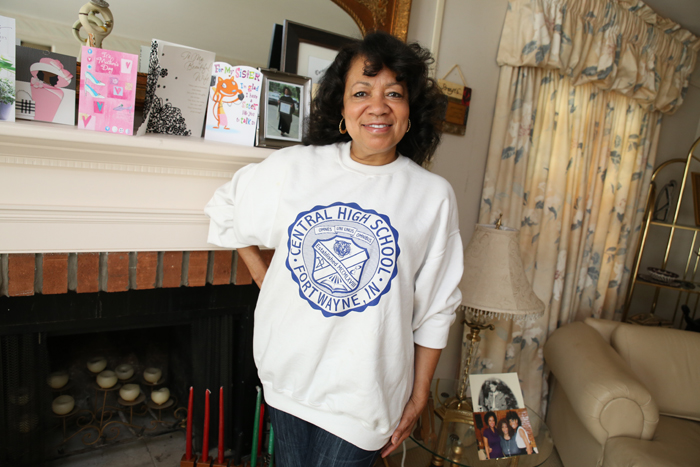
Central High School was a Renaissance for many. It was essentially the Black high school, as segregation and redlining confined Black residents to specific areas.
Condra Ridley
I wanted to experience being in a majority-Black educational environment. However, by my junior year, discussions about closing Central had begun. It was a devastating loss to our community.
Aisha Arrington
When Central closed in 1971, students were bussed to schools like Northrop, Wayne, and North Side High Schools.
Condra Ridley
I was assigned to Northrop and never liked it [laughs]. The bussing experience was a challenge from the start.
Jonathan C. Ray
The way integration was implemented placed the burden of adjustment on those with the fewest resources.
Condra Ridley
Closing Central disrupted our neighborhood. The unity that had begun forming around it was lost, and it destabilized the African American community.
Aisha Arrington
After Central closed, its building became home to Anthis Career Center. The closure coincided with downtown Fort Wayne’s economic downturn in the 1970s.
The Changing Landscape of Downtown Fort Wayne
Downtown Fort Wayne was once thriving, with department stores like Wolf & Dessers, Murphy’s, and Huntner’s Paris. Businesses lined Calhoun and Wayne Streets. However, the construction of Glenbrook Mall redirected commercial activity, leaving downtown nearly abandoned. When I returned to Fort Wayne in 1981, downtown was lifeless.
The Future of the Museum
The African and African American Historical Society Museum is now in a reconstruction phase. We aim to revitalize membership and plan for the future. While we have benefited from our current location, the building is an old house and lacks the proper temperature and moisture control needed for a real museum.
Our goal is to launch a capital campaign to fund either a new facility or a move to the Arts District downtown. We want to create a space capable of hosting nationally and internationally recognized exhibitions.
If there was ever a time to preserve our history, it is now. There are efforts to erase or downplay the realities of slavery and other significant events. It is our responsibility to document and protect our history so that when the truth is finally ready to be told, it will be available.
Next Stop on the SoundWalkOur Sponsors


Additional Funding by Ambassador Enterprises, Lincoln Financial, and Downtown Improvement District.
Download the SoundWalk App
Download the app to experience the interactive SoundWalk, a location-based journey that brings historic Black Fort Wayne firsts to life at the Fort Wayne Urban League.