Overview
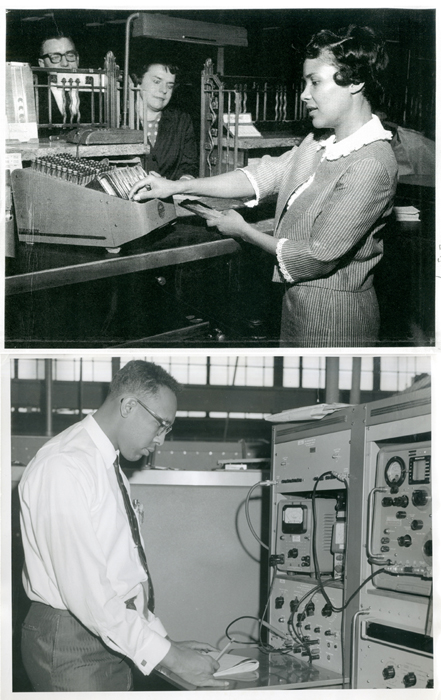
The railroads made Fort Wayne’s East Central neighborhood a hub for its Black residents. Employment transferred to professional work and the steel mills; Black Fort Wayne experienced “firsts” on multiple levels.
“Membership is the lifeblood of any organization.” The Fort Wayne Urban League Guild established itself as a strong ancillary, as the nonprofit defended civil rights in housing and in the workplace, with all of its work accomplished out of a familiar home, for a time.
Listen and Learn
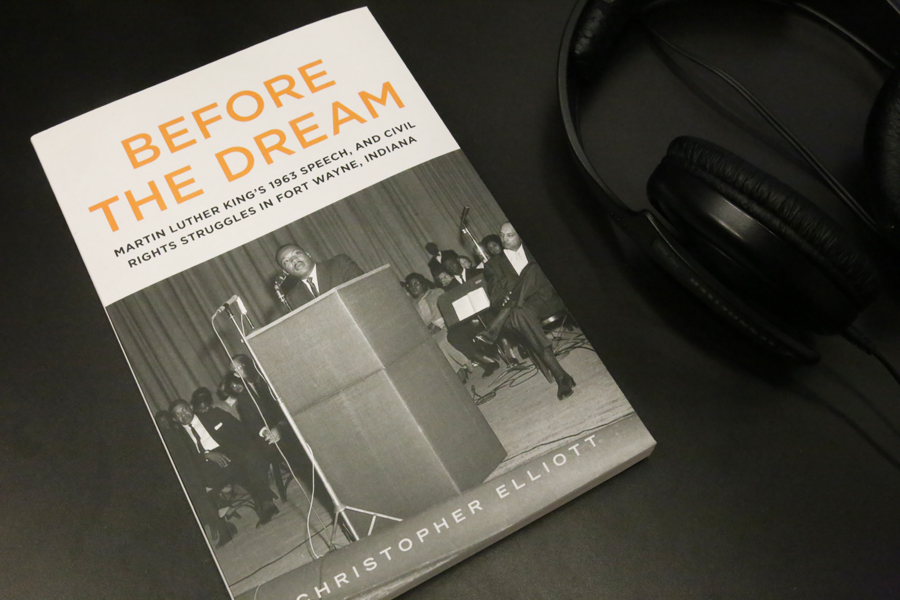
Listen to the original recording of this historic session and follow along with the full transcript. Experience the moment as it happened with both audio and text for easy reference.
Transcript
Denise Porter
The things that happened in the 50s, which was like the era we want to think in terms of civil rights, in Fort Wayne also was going through the same period of people coming back from WW2 now, wanting jobs, wanting the opportunities they were fighting for, in a community that was still… not quite as receptive as they wanted to.
The local Afr. Americans who may have been here by 1 or 2 generations at that time, coming with the masses from the South, from the Great Migration. And it was very understandable how things would clash: We don’t want them taking our jobs, we don’t want them taking our neighborhoods. Some people settled it by not settling it, just being quiet and not saying anything, but the animosity, the troubles were still brewing.
Joanna Patterson
This is Joanna Patterson.
I grew up in Westfield.
My father worked at the steel mill. My father was met with a lot of adversity, being the first black general foreman, a lot of racism.
He would tell us about that.
Denise Porter
I actually started working at the Urban League almost as a child.
I can’t remember not being involved. I remember my parents and the other neighborhoods that people would come together, a lot of times in our basement and would talk about…what are we going to do about this bussing situation, what are we going to do about housing?
I knew most of the people who were engaged in the Urban League, in the NAACP, and other meaningful organizations, either from church, the neighborhood, opportunities, socially with my parents.
Aisha Arrington
During the 1950s, the Urban League helped maintain peace, even at the risk of criticism and often served as a barometer of community needs and changed its methods as conditions warranted.
The Fort Wayne Urban League was located at 436 East Douglas Avenue.
Sheila Curry-Campbell
My name is Sheila Curry-Campbell.
I am a community organizer (laughs). I’m a resource manager, specializing in nonprofits. I’m a past president of the local NAACP. I bought my first NAACP membership as a child.
I’m a child of the 60s. I was raised in East Central.
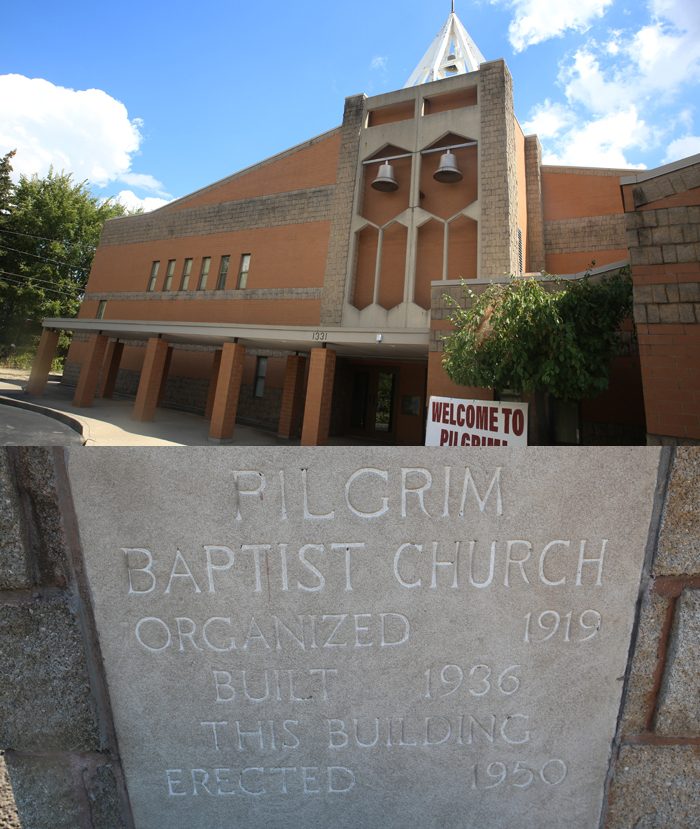
Been a member of Pilgrim Baptist Church.
Eliza and Gay is where I grew up.
Aisha Arrington
436 East Douglas Ave. 836 East Jefferson. East Wayne Street, Ohio, Madison, the Corner of Eliza and Gay…the East Central neighborhood was one of the first areas in the city to develop. During the 1830s and 40s, free African-Americans settled near Francis Street and East Jefferson Blvd.
Synovia Brown
Most of the blacks lived near each other because we couldn’t buy houses anyplace else so we kinda did.
I just turned 91 on January 23, 2023.
We bought a house on Green Street; it was near Pilgrim.
I thought it was great. Because I think there was more togetherness of the Black Community at the time that I see now. We I think depended on each other.
Aisha Arrington
For her years of service in 2008, Synovia Brown, the first female president of the Fort Wayne Urban League, received our first Honoring the Lions Award. And in 2022, she received the League’s Centennial Award.
Sheila Curry-Campbell
For our 100 Anniversary, we actually had a small, intimate group of 100 people, 100 for 100. Synovia Brown, one of our past presidents and very active with the Urban League…was great timing for us to be able to give her her flowers.
My parents were always those people to make sure folks were registered to vote.
Membership is the lifeblood of any organization; I’m also the membership chair of the Fort Wayne Urban League Guild.
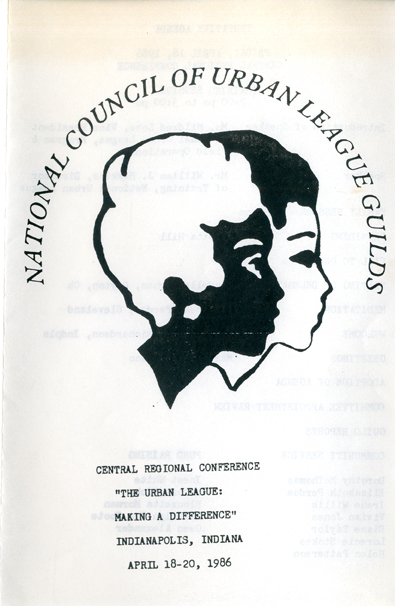
The National Council of the Urban League Guild is an auxiliary, it’s a volunteer group that supports the National Urban League and our local.
The Urban League Guild is primarily an organization of women.
We’re kind of the heart and soul of the Urban League movement, helping our community members, develop their leadership skills,
We’re doing a membership drive right now, and I would love for you folks to become a member.
Denise Porter
When I was a freshman at IPFW, I was a junior board member for the Fort Wayne Urban League…that is they would take a college person to sit with the adults on the board, to actually discuss the Urban League.
I actually sat usually between two people that are still very strong in the community: Synovia Brown and Mary Barksdale.
Mary Barksdale
My name is Mary Barksdale.
I served as the International Harvester board member for the Urban League.
My family went to Union Baptist Church.
Reverend Adams was pastor for over 48 years.
Reverend Adams established One Church, One Offender to help people, getting out of prison to assimilate back into society.
Aisha Arrington
Blacks were becoming more self-conscious and more aware of their power to eliminate injustices under a growing band of leaders like Dr. Martin Luther King.
Chris Elliott
And Reverend Adams invited Dr. King here to speak because there were problems with certain restaurants and hotels not allowing blacks whatsoever, or having segregated seating. Same issues in movie theaters.
My name is Chris Elliott and I wrote the book, Before the Dream: Martin Luther King’s 1963 Speech and Civil Rights Struggles in Fort Wayne, Indiana.
It was June of 1963 when he spoke here.
There were several opening speakers and um finally got to Dr. King, and it was an overflow packed house. His message was, no we’re not patient any longer. Okay, we dealt with segregation and racial discrimination ever since we’ve arrived in this country. The time is now.
Dr. Miles S. Edwards
I was twelve years old on June 6, 1963.
This is Dr. Miles S. Edwards.
Mrs. Anita Jennings Dortch, Doctor Wilson’s daughters, they asked my parents if my sister Elaine could go see Dr. King. She said: Only if you take your little brother with you. She just graduated from high school and she didn’t want to be bothered with me.
Chris Elliott
The primary purpose was the speech. He was in town for about 24 hours, left the following morning. Dr. King was originally supposed to speak here in May. And had to be rescheduled because he was in Birmingham, Alabama; he had been involved a campaign there a couple of months, those were the battles that brought out the police dogs and the fire hoses. Dr. King was even jailed on a couple of occasions.
When he arrived at the airport, the first thing that happened is he was greeted by a group of people, led by Reverend Adams. Also City Councilman John Nuckels was there, he was FW’s first black city councilman; he had been on the council a few years by then. Would end up serving 22.
After that, they traveled to the Hotel Van Orman. And Mr. Van Orman and Reverend Adams had clashed on numerous occasions because Mr. Van Orman for a long time would not allow blacks to stay in the hotel. Through pressure applied by Reverend Adams and some other civil rights activists in the area, he relented.
Reverend Adams goes to the Hotel Van Orman with Dr. King there, Reverend Abernathy was there as well. And he goes to Mr. Van Orman at the front desk and he says I want suites for these men and I want them to be complimentary. And he agreed to it. So they checked into the hotel, relaxed for a couple of hours, before moving back to the Scottish Rite for the speech later that night.
Dr. Miles S. Edwards
People were picketing outside, and people were yelling un-pleasantries, if you will, about Dr. King’s presence, and I really didn’t understand why they were saying these things.
Chris Elliot
There were several opening speakers finally got to Dr. King, and it was an overflow packed house.
Dr. Miles S. Edwards
There was so much thunderous applause and people saying, Amen, and, go head on. It was like an experience in historically Black congregation at that time, and so I could not understand or remember everything that he spoke about. But he talked about the promises that were, you know, that were kept to the black negroes, that’s word that they used at that time. And that we had all rights that other people had.
Chris Elliot
His message was, no, we’re not patient any longer. Okay, we dealt with segregation and racial discrimination ever since we’ve arrived in this country. The time is now.
Dr. Miles S. Edwards
Then what, a couple months later…was it in August? The March on Washington.
Chris Elliot
Only one year later, George Wallace gives a speech in Fort Wayne, extremely racist Alabama governor.
Dr. Miles S. Edwards
They said we were going to Mackay Hall of the First Presbyterian Church. There was gonna be reception for Dr. King. They brought Doctor King through, and then he turned around and he said: Who’s this young man? And my sister said: Oh, that’s nobody but my little brother Miles. So [laughs] Doctor King turned away from them and came over to me. And introduced himself to me. You know, he asked questions. And Mr. Knuckles and Dr. Abernathy, Ralph Abernathy, they came and said, Dr. King, we have a plane to catch. And so he continued to talk with me, and they said, Dr. King, we have a plane to catch. He stood me up, he shook my right hand, he took his left hand and patted me on my head, and he said: Grow strong, Miles, grow strong. And they whisked them away.
Aisha Arrington
After Dr. King’s assassination, the National Urban League consulted with leaders of its 87 local affiliates. The nonprofit developed the “New Thrust” program to become more directly involved in the community’s problems. Persuasive talk was not enough; more dynamic action–to enact institutional change–was needed. The new philosophy was sharply felt in conservative Fort Wayne.
Synovia Brown
I became Urban Guild League President in 1973.
As a Guild member, as a Guild president, I often would be a person that would recommend people for jobs, for many things in the community.
They were doing things for young people and its something that I’ve tried to follow because to me if we don’t help the young people find a place for themselves, then we failed them.
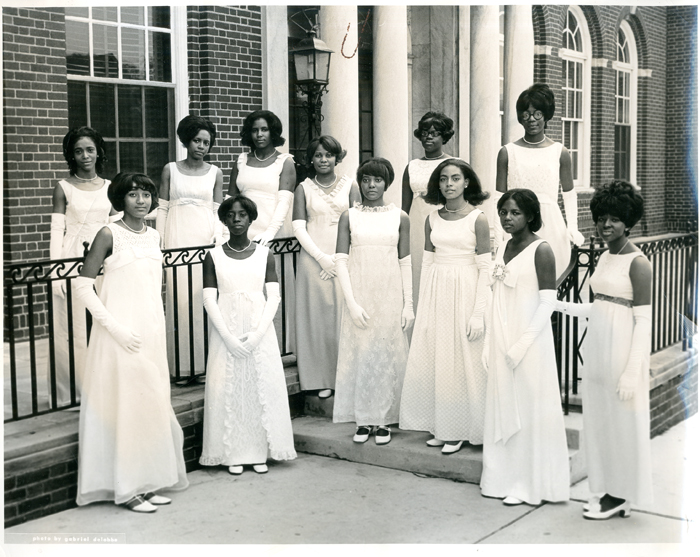
We knew that in white community, there was this coming out of a certain age for some women; we didn’t have that until the Cotillion for blacks.
The Cotillion I thought was wonderful I thought young women being sought to do good things in school and out of school
We started the Miss Black Fort Wayne pageant. And I think a lot of people were real happy to see that. We did it until there was a Miss Black America and we didn’t feel the need to do it more.
We started what was called a Beautillian because our young men were just kind of left out of things.
One of the other accomplishments that I’m very proud of is having brought to Fort Wayne Lorraine Hansberry, To be Young Gifted and Black, to the Scottish Rite Auditorium, Feb. 15, 1972. It was the first time that a Black play had been brought to Fort Wayne.
Aisha Arrington
In 1974, The Fort Wayne Urban League’s field office was located at 1304 South Anthony Blvd.; its administrative office was found at 227 East Washington Blvd.
Next Stop on the SoundWalkOur Sponsors


Additional Funding by Ambassador Enterprises, Lincoln Financial, and Downtown Improvement District.
Download the SoundWalk App
Download the app to experience the interactive SoundWalk, a location-based journey that brings historic Black Fort Wayne firsts to life at the Fort Wayne Urban League.