Overview
The F.W. Urban League’s ambitions were held back by the lack of a permanent address, a fact that has plagued them since leaving their Douglas Ave. home. But the nonprofit still found a platform to contribute and authored the State of Black Fort Wayne, reasserting itself as a viable research wing of the movement.
But a permanent home was in the works, a daydream made real by then President and CEO AV Fleming: a multi-use building resting in the middle of two other needed services and unlike many Urban Leagues across the country.
Listen and Learn
Listen to the original recording of this historic session and follow along with the full transcript. Experience the moment as it happened with both audio and text for easy reference.
Transcript
Carol Cartwright
Poverty and race intersect a lot.
From 1989 to 2010, most of the time I was the Director of Planning and Program Research but I did do two stints (of about a year each) as the interim director of the League.
My focus of my graduate work was on racism and poverty.
I went to work at the Urban League because of my academic background and my commitment to the mission.
As Director of Planning and Program Research, I suggested that we emulate some of the publications being done by other Urban Leagues and that we produce a State of Black Fort Wayne.
There was a State of Black America produced by National Urban League, and so those were used as models for developing the document: The State of Black Fort Wayne.
Developing that took place over a couple of years.
And it was published in 2003.
The idea was to provide as much information about African-American population here.
We had some information on business and economic development, demographics, poverty, employment, housing, education.
I was the person who recruited the authors who did the different sections and proofread it.
Jon Ray
I wrote a chapter in that book when I was at the State. How public assistance and child protection affected the Black community of Fort Wayne.
This is Jonathan C. Ray.
One of the things that I try to say is that people think of public assistance is the key for welfare, and it really isn’t. I mean, the reality is the welfare budget nationally, most of that budget are people in nursing homes.
I talked about some of the things that were fallacies, but then I talked about how much does that really, in terms of cash assistance, what does that mean? What does it mean to have food stamps and how does food stamps impact the local economy?
We talked about how public assistance actually empowers not just that client but actually fortifies the community.
Carol Cartwright
It was published for agencies…government agencies, not-for-profit agencies, health agencies…we got data from them but in some cases, we also brought new data to them.
It’s not something that your average citizen is going to want to sit down and look at or read it, unless they’re particularly interested in that topic.
Aisha Arrington
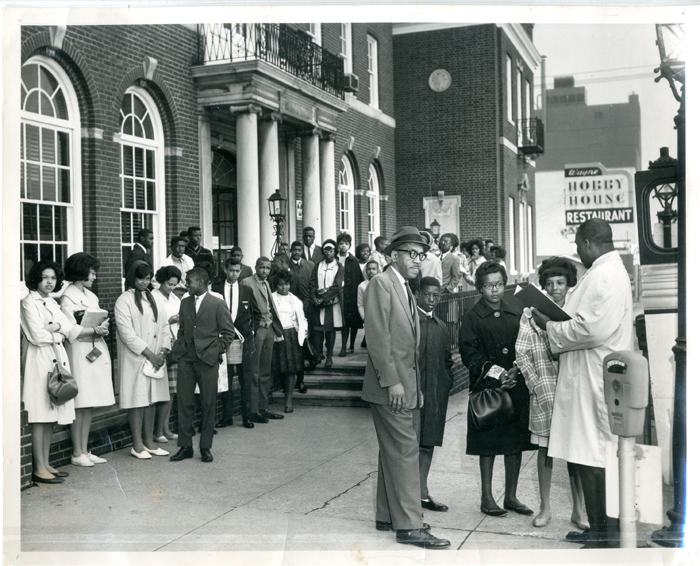
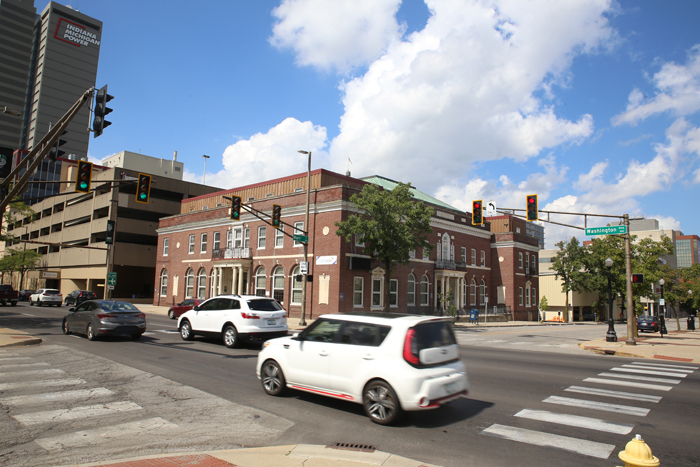
The Fort Wayne Urban League was parked at the old Foellinger Building downtown, at Barr and Washington. It’s now Brightpoint.
Carol Cartwright
We were up on the third floor when I was initially hired, they had been going through some tough times, and so they were just starting up again. And they had just hired a new executive director who was Rick Frazier.
So we just had to get our act together, so to speak.
We were very limited in what we could do on the third floor. As we were wanting to serve more people we couldn’t do that there.
Leroy Jackson
You had classes, you had to get someone from the facility to come in and set up. For us to have the freedom to do what we wanted to when we wanted to, I think, that made it more vibrant.
My name is Leroy Jackson.
I have been a member of the labors union for 50 years, and I’ve worked with the Urban League for early quite a few of those years.
John Rogers
It got more and more crowded in the office. The Urban League was very vital at about that time. And it really was a little bit off-center to a lot of the communities that we were trying to serve.
My name is John Rogers.
I’ve been a member of the board off and on since about the year 2000.
Carol Cartwright
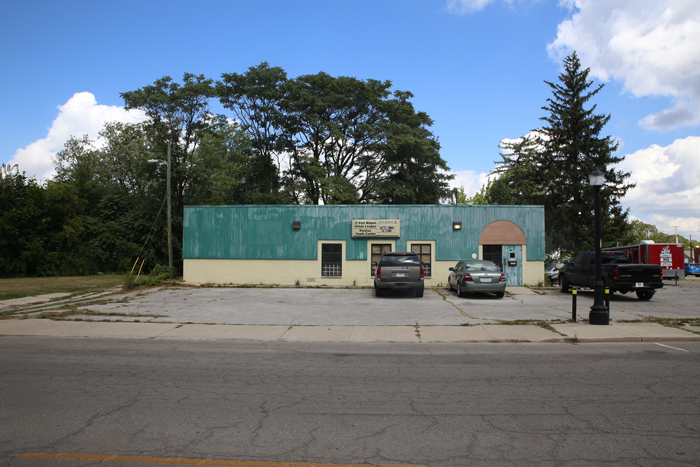
There’s a building down on Pontiac Street that used to be called the Pontiac Youth Center. We actually rehabbed the building, a facility there that served as a youth center there. It was a small building.
Jon Ray
I have to give credit to AV Fleming…the guy who came before me…the Urban League, they were in the building downtown, but the problem with that is the owners of the building didn’t want the Urban League to put their name on the outside of it. So unless you knew that that was the Urban League building, you wouldn’t know. And so I used to joke with AV and say, the Urban League is an urban legend. It was his idea for building the building, he made that happen.
My name is Etse Mulugeta.
I work at uh the UL from June of 1994 to (I think) July 2020. And now I volunteer whenever I have time.
When I worked at the Urban League, I work as an accountant.
Dr. Fleming, personality wise? He…could talk to people. He taught at Indiana Tech, he taught (I think) I marketing. He was a big personality, you know what I mean.
Dr. Miles S. Edwards.
I remember being in the office and he showed me the plans for the early Childhood Center, the Pontiac Library, and then for the Urban League in front the driveway, he wanted that to be the African-American museum.
And for what AV wanted to do…was fantastic, to have those four entities right there, that whole block: the library, the childhood center, Urban League, and then the African-American Museum.
Aisha Arrington
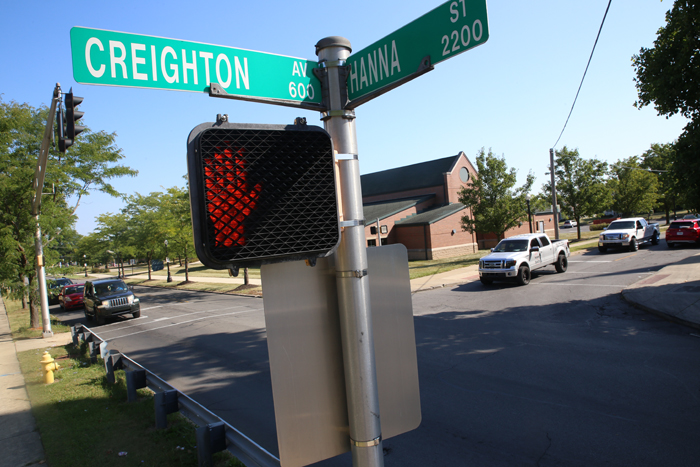
Site for the new multipurpose building was designated for the Hanna/Creighton corner.
Denise Porter
A lack of a permanent address sometimes gives a feel of a lack of a permanent presence in the community. That place isn’t there, the community isn’t there, you’re probably missing out on a generation of who know what to do in that.
The Urban League had at least five or six buildings or places or offices that I recall. One of which was just torn down at the corner of Anthony and Aliger Street. It was an older, three-story brick building. From that they ran the executive offices; they ran the job opportunity programs, educational programs, after school programs.
The Hanna/Creighton area has a history of its own. Up until about the late 50s, early 60s, it was predominately a white German area. It was where people who worked at the Harvester tended to live. There were always some little ma and pa kind of stores. Lindsey Cookies. Seyferts Potato Chips was in that area.
Bit by bit, as the whites began to move further out in suburban area, the blacks began to move further and further south in the community.
As things changed, the businesses were changing, the structure of where you went to do things was changing also. Because these were neighborhoods, you had neighborhood grocery stores. You had supermarkets that were owned and operated by family organizations. The Scotts family owned what became the Kroger franchise; the Rogers family were also purchased out.
John Rogers
We are a fourth generation company. Originally started out in the grocery business in 1944.
And being that the stores were sold 28 years ago, most people may not know us as Rogers markets. We had grocery stores all over the city of Fort Wayne. I think our first big store was at Pontiac and Smith Street.
Denise Porter
Mulolies had at one time 11 stores in this community, so you can literally walk from one neighborhood to another neighborhood and get another Mulolies store.
Condra Ridley
Phil’s Market was located just a block north of where we lived at Creighton and Lafayette. That helped our community to at least have access to food and fresh meat and all that.
I grew up in the neighborhood actually. I grew up right at the corner of Creighton and Lafayette.
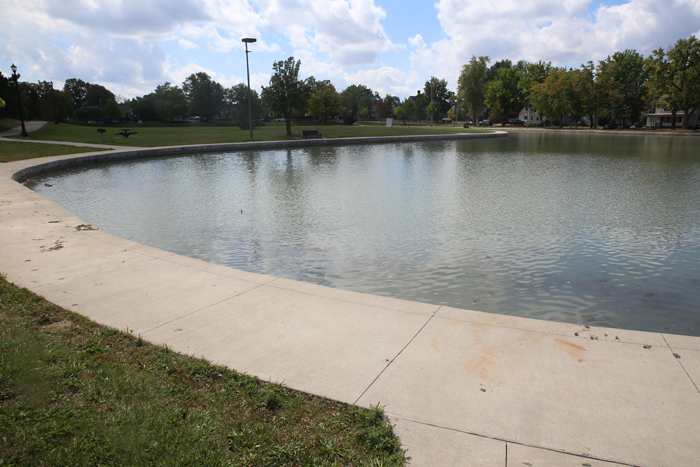
New homes have been constructed right there at the corner. We think that the neighborhood has survived very well; it still looks good they’ve at least done some things to upgrade the Reservoir Park.
Leroy Jackson.
In 1972, I helped build the Reservoir.
The Reservoir was a giant mud hole; they was clam digging all of the mud and all of the debris out of the bottom of it to get ready to start construction on it, and it was a mess.
It’s still there. And actually the second weekend in June, we have a fishing derby every year.
Where the Urban League’s at now there were houses there, and they just purchased the houses and torn them down. The only thing we had problem with was the soil. All the companies worked good together.
I was a business agent for the labor union. When they started building, they put a condition in there that a percentage of the people on that building had to come from that neighborhood. At points, probably 20% of the manpower, were basically blacks from the neighborhood.
Carol Cartwright
Our architect was Grinsfelder and Associates. We actually started out by telling them what we wanted to do what programs we wanted to offer.
John Rogers
And then I think it was probably the library that came up with the idea to establish campus out there. And have these three very significant buildings.
Leroy Jackson
The library, the UL, and CANI. It took almost two years to complete it.
John Rogers
When you put those kinds of operations in there, they’re going to be there for a long time.
Leroy Jackson
I mean, they built all the houses, Renaissance Pointe. They did Village of Hanna.
They built all the stuff around the Urban League.
Etse Mulugeta
In January of 2005, we moved from Brightpoint/United Way building to the one on Hanna Street.
Next Stop on the SoundWalkOur Sponsors


Additional Funding by Ambassador Enterprises, Lincoln Financial, and Downtown Improvement District.
Download the SoundWalk App
Download the app to experience the interactive SoundWalk, a location-based journey that brings historic Black Fort Wayne firsts to life at the Fort Wayne Urban League.